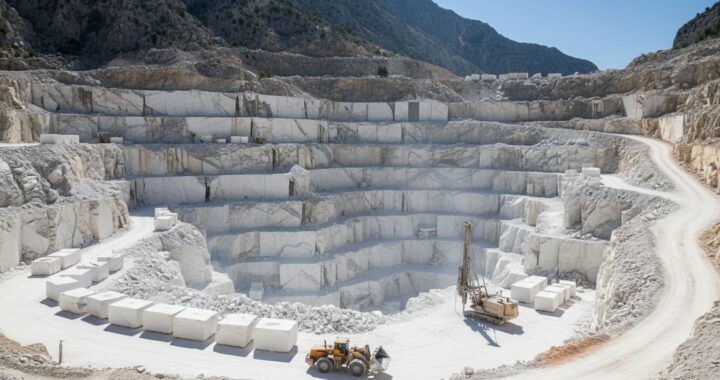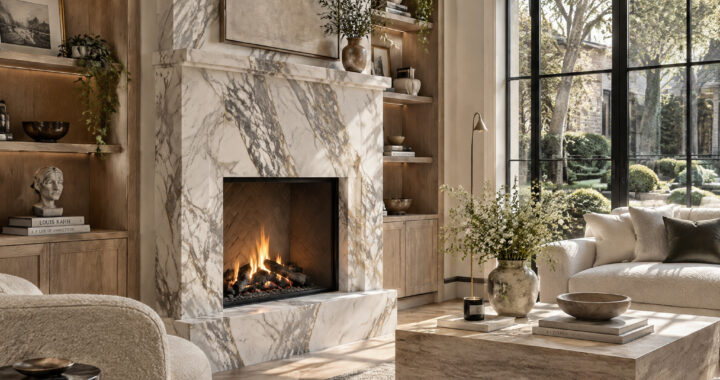

Marble For Fireplace Surrounds
Key Takeaways
-
Marble is heat resistant and non-combustible, which performs well around wood-burning and gas fireplaces, avoiding warping, cracking, or discoloration. Prior to selecting marble, confirm that your fireplace design and installation plan adheres to local building codes for clearances and safety surrounding the firebox.
-
Adding a marble fireplace surround provides architectural interest and visual prestige to both traditional and modern interiors, particularly when you utilize carved mantels, ornate trims, and period profiles. If you’re designing a remodel or new build, think about how the style of your marble surround fits with the interior design and future resale value.
-
The natural veining, color variation and patterns in marble add visual depth that can make the fireplace a focal point of the room, especially with bookmatched slabs or high-contrast combinations like marble against wood or metal. Choose from options such as Carrara, Calacatta, Nero Marquina or Crema Marfil depending on the color scheme and atmosphere you’re trying to establish in the room.
-
Structural planning is key. Marble is heavy and needs to be accounted for with suitable substrate preparation, load-bearing supports, and appropriate thermal clearances to prevent cracking or movement. Collaborate with a skilled installer or engineer to verify wall and floor load-bearing capacity, select the appropriate mortar or adhesive, and align the surround with the hearth, mantel, and trim for a secure, flush finish.
-
Surface finish and layout options like honed vs. polished and large-format panels vs. mosaics play an important role in the maintenance, appearance, and feel of your fireplace surround. Determine up front if you want a low-sheen, forgiving surface or a high-gloss, dramatic look and then design the layout, including any bookmatched features, to suit the room’s style and your cleaning habits.
-
In order to maintain the beauty of marble surrounds, it is important to clean them regularly with pH-neutral products, seal them once a year, and remove any soot quickly to avoid etching or staining, especially around the firebox and hearth. When deciding between natural marble and its synthetic counterparts, consider the distinctive aura and genuineness of authentic stone versus the reduced upkeep and consistent look of engineered options to determine what aligns best with your lifestyle and budget.
===
Marble for fireplace surround is a natural stone choice used to frame and highlight the firebox area in a living space. Homeowners choose marble for its crisp lines, variety of colors, and silky, cool surface that takes heat beautifully. I frequently see designers pair marble surrounds with sleek modern gas inserts or traditional wood-burning units to achieve a crisp, powerful focus. Below, our guide to pricing, maintenance, stain vulnerability, and how marble ages.
Why Choose Marble Surround
Marble is a good choice for fireplace surrounds because it addresses both the technical and aesthetic requirements simultaneously. It provides you with a safe, durable, and visually bold focal point in your room.
1. Heat Resistance
Marble is a natural stone with formidable heat resistance, so it can sit up close to a wood-burning or gas fire without the worry of melting, burning, or catching fire. Because it’s non-combustible, it is a common selection for home and commercial fireplace surrounds.
Solid slabs of marble and good-set tiles withstand fireplace hot spots without warping, bowing or popping off the wall. When supported on a flat, stable substrate, stone expands and contracts in a controlled way, so it does not crack or discolor under normal fireplace use.
Unlike softer limestone, marble doesn’t tend to chip or spall at the edges under repeated heating cycles and stays cleaner looking longer. Granite is heat‑resistant, but marble offers a more classic appearance, which most owners desire in the living room.
2. Architectural Value
Marble surrounds tap into the great architectural epochs, from French Louis XV mantels with curved jambs and shell carvings to English Regency pieces with clean lines and shallow fluting and even early Modernist creations with massive, plain planes of stone. Most vendors provide hand-carved antique mantels reclaimed from European structures, as well as intricate replicas molded or carved by artisans, which enables you to complement a period house or replicate a certain look without scavenging junkyards. Profiles span from plain flush surrounds and thin picture-frame trims to deep shelves, corbels, pilasters, and detailed friezes, so the same material can play in a minimal, contemporary flat or a traditional town house. Thanks to this heritage, a marble fireplace still tends to read as a “permanent” architectural element, lending understated cachet and tangible market value rather than feeling like some sort of ephemeral ornament.
3. Visual Depth
Each marble block has its own veining, tone shifts and mineral flecks, so the surround adds depth even before you decorate the mantel.
Bookmatched slabs – essentially two matching pieces mirrored together like an open book – can transform the fire wall into a powerful visual axis, pulling the eye towards the center of the space.
You can offset marble legs and hearth with a wood mantel, metal inlays or dark firebox frame to add contrast and interrupt the monolith.
Color choice matters: bold, dark veins can anchor a modern space, while soft white marble with light gray veining fits calm, minimal rooms or historic interiors.
4. Enduring Longevity
Marble in fireplaces goes back centuries, and the pieces that are still in position demonstrate how well it can absorb wear, minor dings, and hairline stress while still maintaining its integrity. Once installed, a new marble surround can be indistinguishable from an antique after several years, as the stone gradually acquires a patina that mellows the finish rather than ages it.
Day-to-day care is simple. Dust and occasional wiping with a mild cleaner are usually enough since a surround does not face food spills or acids like a kitchen countertop and is less prone to etching.
5. Code Compliance
Most building codes recognize marble as a non‑combustible facing, so it typically qualifies for material requirements for both gas and wood‑burning units when properly installed.
You still need to consult your local codes for minimum clearances from the firebox opening and hearth, as those distances are based on the fire rating of the assembly, not just the stone itself.
Even the backing board, adhesives, and anchoring system must adhere to code and manufacturer guidelines to ensure that the entire surround remains secure and safe under continuous heating.
Select Suitable Marble Varieties
Marble varieties affect the style of a fireplace quickly, because every stone has its own shade, pattern, and surface. For a surround, it’s useful to narrow down to a couple of favorites and compare them on appearance, price, and room compatibility.
-
Carrara
-
Calacatta
-
Nero Marquina
-
Crema Marfil
A lot of projects blend in stones like Emperador (light to dark brown, warm and rich) or Arabescato (busy gray veining) as highlights or to create a more robust statement. Think through slab size for large, clean faces, thickness usually 20 to 30 mm for stability, and finish: honed or matte to hide minor wear, polished for high gloss but more visible etching. Marble fireplace surrounds can easily run 55 to 150 USD per square foot, which is 592 to 1,615 USD per m², depending on the variety, cut quality, and install work, so shop around before you fall in love with a stone.
Examine local availability, heat resistance ratings, and any comments on calcite content, as stones rich in calcite etch more quickly. Fireplace surrounds receive less acid than kitchen tops and tend to hold up better.
Carrara
Carrara’s soft gray background with feathery white veining reads calm, not showy, which makes it easy to live with in smaller living rooms or apartments where you don’t want the fireplace to dominate the space.
It plays nicely with classic mantels, understated flat surrounds, and even minimal builds where you want a little bit of movement but not so much that it’s screaming. A lot of buyers go for it because it’s widely quarried, easier to locate in most markets, and typically lower on the marble price scale.
Stylistically, Carrara plays well with white, gray, or stainless-steel-heavy spaces. You can combine it with pale walls and light wood floors for a gentle, cohesive appearance or against darker built-ins if you desire a bit more contrast without going full black.
Calacatta
Calacatta, with its bright white base and broad, wide veining that can be gold, gray, or a light beige, tends to read like a statement stone right away. It suits luxury or feature fireplaces where the surround is effectively wall art, especially if you take large slabs and book-match them to create mirrored patterns across the firebox opening. This design is perfect when the veining draws the eye back towards the center of the room. Since Calacatta blocks are rarer and selection is limited, price and lead times are higher than Carrara. You typically want to design your layout around one or two large slabs rather than a lot of small cuts to avoid disrupting the veining.
Nero Marquina
Nero Marquina is an inky black marble with stark white veining slicing through it, so the fireplace becomes a high-contrast centerpiece. In contemporary spaces with white walls or pale concrete floors, this can frame the fire like a painting. It plays beautifully with more understated stones or even painted plaster, and you can use it just for the inner surround and leave the outer mantel in a light marble or wood if you’re after drama but not to darken your entire wall.
Polished black surfaces show marks easily. Regular sealing and gentle cleaning matter more here to keep the gloss and slow down minor etching over time.
Crema Marfil
Crema Marfil has warm beige tones with soft, typically sparse veining. It adds a gentle, neutral foundation that feels welcoming in family rooms or communal spaces.
It sits in a middle ground between classic and modern. You can pair it with carved, traditional mantels or straight, boxed designs, and it still looks natural.
Design-wise, it pairs beautifully with brown marbles like Emperador on hearths or with mid wood tones in shelves and floors, which keeps things toasty without taking the palette too dark.
Plan Structural Installation
Marble is great for fireplace surrounds. It is heat resistant and wears down gradually, but it is stone, heavy, and unforgiving. A touch of sober planning around structure, heat, and layout will count more toward long-term performance than the precise color you select.
Weight Support
Think by weight first, rather than guess. Calculate slab or tile surface area in square meters, multiply by stone weight (most marbles run around 25 to 30 kilograms per square meter for 20 millimeter slabs), then add any hearth and mantel stones. A full surround with a hearth can quite easily exceed 150 to 250 kilograms, which is more than sufficient to strain weak subfloors or thin stud walls if they are already borderline.
Compare that estimate to the floor’s and wall’s load-bearing specifications. Verify joist dimensions, spacing, span, and present live-load rating and compare to what marble and existing finishes will contribute. For walls, confirm stud spacing, sheathing material, and anchors. A structural review could set off a permit when you expand or reconstruct the hearth or mantel framing, even if thin tile by itself would not. Most areas consider those structural modifications.
If your design calls for a massive marble mantel or thick jambs, make sure to plan for steel angles, concealed brackets, or engineered stone supports fixed back into framing, not only into drywall or weak masonry. Dry-fit all major pieces, or use full templating prior to cutting. That 10-minute measurement run, even with a $150 to $400 templating cost, can save you weeks of rework and reordering. Ignoring this is dangerous when installed price typically runs between $55 and $150 per square foot.
Never lay marble on spongy subfloors, loose bricks, or bowed framing. The price tag to either rebuild a failed substrate typically ranges from $200 to $800 or shore up a sagging hearth, which typically costs between $500 and $2,000. This cost typically dwarfs what initial structural inspections would have cost.
Substrate Prep
Think of the substrate as the mechanism that holds your marble secure, straight, and protected in the vicinity of heat. Strip back to a sturdy substrate, then smooth and wipe it down. Eliminate paint, dust, and old thinset ridges so your new mortar adheres. On top of wood framing, install cement backer board with a heat rating, fastened according to the pattern mandated by the board manufacturer. On brick or concrete, fix cracks and hollow spots so you don’t trap movement beneath fragile stone. For marble or marble-faced porcelain, select a heat-rated, natural-stone adhesive or mortar. Many standard mastics can soften with the increased temperatures at the firebox edge. A heat-rated thinset on cement board provides an infinitely stronger construction than greenboard and bargain-basement adhesive that typically fall apart within a few years. Note any walls that may experience steam, outdoor air leaks, or chimney condensation and add waterproofing because trapped moisture will stain marble or nurture wall-cavity mold. Each material in that pile—backer, mortar, membrane—needs to say it can be used with a fireplace or at least high heat areas around them.
Thermal Clearance
Clearance is more like keeping marble and adjacent framing within safe temperature bounds while remaining in code compliance. Remember the clearances your local codes require between the firebox and finish, even if marble itself is not flammable. Codes reference framing and concealed materials, not just the surface.
A common set of minimums always confirm locally looks like this:
|
Fireplace type |
Vertical clearance from opening |
Horizontal clearance from opening |
Notes |
|---|---|---|---|
|
Gas (sealed insert) |
50 mm (5 cm) |
50 mm (5 cm) |
Many allow non-combustible closer |
|
Wood-burning |
150 mm (15 cm) |
150 mm (15 cm) |
Often stricter for mantels and trim |
If floorplans or existing framing nudge marble nearer than you’d prefer, insert a fire-rated board or insulation layer between stone and studs, or carve a petite reveal gap around firebox with non-combustible trim. These small layout decisions at this stage determine whether the install passes inspection or requires expensive re-do.
Surface Finishes and Layouts
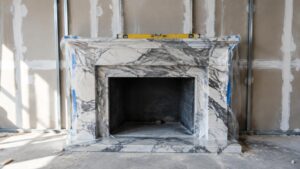
Surface finish and layout define how a marble fireplace sounds, appears, and wears over time in everyday use. Finish controls sheerness, color depth, and how much fingerprints, soot, or fine scratches pop. Layout defines scale and rhythm: small tiles, large panels, or strong symmetry with bookmatched slabs. We typically surround with marble at 19 mm (approximately 3/4″) thick, but thickness varies depending on construction requirements, local code, or how far out you want the stone to protrude from the wall. Because marble is calcite‑based and sensitive to heat and acids, finish and layout link directly to care: routine cleaning with a soft cloth and pH‑neutral stone cleaner, planned sealing cycles, and smart joint details like caulked expansion joints at inside corners and stone‑to‑hearth transitions. Over time, you can upgrade a simple marble wall in phases — paint or refinish, tile or thin‑veneer refacing, move up to large‑format slab cladding or bookmatching, shift the mantel, or incorporate mixed materials like wood or plaster for contrast.
Honed Finish
Honed marble has a matte surface, with very little gloss, so the light dissipates gently rather than ricocheting off in a jagged reflection. It plays great in modern rooms that prefer minimal glare, and in rustic or Norse-themed rooms where you desire the stone to hunker quietly behind the flame instead of going toe-to-toe with it.
Since the surface isn’t mirror-shiny, honed finishes camouflage fingerprints, light etching, and daily soot haze better than polished stone, making them practical for fireplaces that get a lot of action or families with kids and pets running amok around the hearth.
Honed marble usually needs sealing a bit more often than polished material, often every 12 to 18 months in a busy living room, but day-to-day care stays simple: wipe with a pH-neutral stone cleaner, avoid abrasive pads, and watch the area closest to the firebox opening for dull spots.
Surface Finishes and Layouts – If you’re ordering stone online instead of hand-selecting slabs, verifying that the finish is actually “honed” and not “polished” or “antiqued” is critical as photos can wash out the actual sheen level.
Polished Finish
Polished marble has a luminous, glossy surface that is velvety to the touch and functions almost like a mirror, throwing light back into the room and lending the surround a more formal presence. It complements detailed mantels and classic profiles and interiors that tend toward hotel‑lobby or gallery‑style polish. Polishing tightens the surface, so colors read richer and darker and veining patterns pop with high contrast, which works especially well on strongly figured stones such as Calacatta or Arabescato. At the same time, the high sheen makes any etching from dropped drinks, cleaning chemicals, or smoke film more visible, and fine scratches or soot streaks can show quickly on dark stones. You need a consistent cleaning routine with a soft cloth, pH-neutral cleaner, and no harsh powders. Polished marble tends to hold sealers longer than honed, but still should be checked regularly near the firebox edge. In heavy‑use wood‑burning fireplaces, the interplay of heat cycling and marble’s calcite base can increase the risk of thermal‑stress cracks if the stone sits tight to the metal firebox. Leaving a small gap and using a heat‑tolerant, flexible sealant at that joint helps the surround move without damage.
Bookmatched Layout
Bookmatching pairs two or more slabs so their veins match one another like pages in a book, producing a stunning ‘V’ or butterfly effect across the fireplace face. It works best on big, blank walls, where the entire graphics can read from floor to ceiling.
For pristine outcomes, fabricators typically select slabs from the same block and lot number, dry-fit them in the shop, then install as large-format panels with minimum joints and flexible caulk at corners. The mirrored stone creates texture and shadow lines even when the fire is off, so the wall retains depth on a quiet day.
Long-Term Maintenance Protocols
Long-term care for a marble fireplace surround is all about a repeatable, written routine, not sporadic deep cleans. A bare-bones checklist preserves the surface steady and makes issues straightforward to capture early.
Recommended checklist
-
Daily / after use: * Dust the surround with a soft dry cloth.
-
Blot spills or soot marks immediately.
-
-
Weekly: * Wipe all marble with a pH-neutral, stone-safe cleaner. * Wash grout lines to clear soot and loose debris.
-
Quarterly: . . * Inspect for etching, fine scratches, or dull spots. * Look for persistent soot marks that indicate draft problems.
-
Annually: . . * Seal all marble with a stone-compatible sealer and log the date. * Check if anything requires professional repair.
Frequent maintenance reduces wear, restricts staining on this porous stone, and keeps subsequent repair work minor and less expensive.
Clean Regularly
-
Soft microfiber cloth or non-scratch sponge for daily wiping.
-
Opt for pH‑neutral or stone‑specific cleaning agents. Stay away from vinegar, lemon, or bleach.
-
Never use scouring powders, steel wool, or rough pads that can scratch.
-
Make sure to flush with clean water and dry thoroughly to prevent streaks and water marks.
-
Scrub grout lines with a gentle brush and mild soap. Forget about grouting acids.
-
For persistent spots, try a little baking soda and water paste on a small area. Then rinse well and dry.
Routine cleaning prevents soil and soot from grinding into the pores of the marble, where they can discolor and mar the finish. As marble is porous and acid sensitive, immediate spill wiping is a must, particularly with fluids such as wine, juice, coffee, or soot dirtied with moisture.
Seal Annually
Marble benefits from a stone-compatible sealer that slows stain absorption and makes day-to-day cleaning easier. A yearly cycle works for most surrounds, while highly polished marble may only need resealing every 18 to 24 months if water still beads on the surface.
Seal in thin, even coats, paying special attention to the firebox edge, hearth and front of your mantel, where soot, heat and touch are at their most intense. Adhere to the product’s timing for dwell, wipe and cure. Don’t speed drying, and note the date so you know when the next round is due.
Treat Soot
Soot does not do well to sit. Remove loose soot with a soft brush or vacuum with a brush head, moving downward so particles do not drag across the stone.
For persistent marks, dip a cloth in mild soap and warm water, blot lightly, then rinse and dry. Never use strong solvents that can remove the finish or alter the color. If you notice the same stains in the same spot repeatedly, have a technician inspect the fireplace draft and sealing. Airflow defects can blow soot onto the surround.
Natural Versus Synthetic Realities
If you select marble for a fireplace surround, you’re choosing between the natural stone and synthetic versions like cast stone or engineered stone. Both can frame a fire well, but they address different dilemmas around cost, maintenance, and how “real” you want the surface to feel up close.
Natural stone like marble, limestone, and granite adds actual geological diversity. Color shifts, mineral flecks, and veining mean no two slabs are alike. A white marble surround in one home will never be the same as another, even if both are from the same quarry and finish. That one glance is why folks associate marble with sophistication and subdued luxury, particularly in a great room where the fireplace serves as a focal point.
Synthetic things go nearly the opposite direction. Cast stone and engineered products seek uniformity and reliability. The hue, dots, and motif recur in a more disciplined manner. For a person who desires a very neat, even appearance, that’s a benefit. For anyone pursuing that “cut from the earth” vibe, the consistent appearance may seem bland and nearly too precise.
Natural stone has more maintenance over time. It must be sealed now and then to keep it safe from smoke, soot, or drink stains on the hearth. Acidic spills etch marble, creating those dreaded dull spots if you don’t wipe it up quickly. This is part of the trade-off: more character, but more care and more risk.
Synthetic and cast stone embrace durability. A lot of these mixes deal with heat and moisture well and do not etch. It is a convenient option for porches and sunrooms and homes where they do not want to deal with seal cycles and mild cleaners.
Pros and cons of natural marble surrounds:
-
Pros: unique veining, deep visual character, strong design impact, high heat tolerance near the firebox
-
Cons: High cost, as high-end slabs can exceed $2,150 per square meter. It needs sealing, has a risk of etching and staining, and requires more care during cleaning.
Pros and cons of synthetic or cast stone surrounds:
-
Pros: Lower material cost, more uniform color and pattern, good heat and moisture resistance, lower maintenance, no etching worries.
-
Cons: Lacks the depth and movement of real marble, can look less “authentic,” and pattern repetition is more obvious at large scale.
In the end, the choice is about what matters more: paying a premium for live, natural variation and a sense of stone with history or choosing the control, simplicity, and budget fit of synthetics.
Conclusion
There’s calm, weight and clean lines in marble about a fire. It whispers that the room counts. Heat hits the stone. Light flows in the veins. It begins to feel like the centerpiece of the entire room.
Selection of slab forms ambiance. White Calacatta keeps it bright. Dark Marquina skews a bit sharper and more bold. The honed finish camouflages the little marks. Polished finish reflects even more light.
Proven prep keeps cracks and stains out. A rigid frame, proper glue, and sealed seams do the majority of the work. Constant attention every year takes care of the rest.
If you’re planning a new surround or an upgrade, measure your space, identify your budget, and then visit a local stone shop to request to see full slabs in person.
Frequently Asked Questions
Is marble a good choice for a fireplace surround?
Marble is a hard, heat-resistant natural stone, so it’s perfect for fireplace surrounds. It provides a classic, luxurious appearance and can improve perceived home value. It does require appropriate sealing and consistent maintenance to prevent staining and etching.
Which marble types are best for a fireplace surround?
Dense marbles with even structure perform best. Carrara, Calacatta, and Statuario remain popular choices for light looks, while Nero Marquina is a favorite for dark designs. Be sure to verify heat resistance and recommended use with your stone supplier prior to purchasing.
Do I need a professional to install a marble fireplace surround?
We highly recommend professional installation. Marble is heavy and brittle at the edges and needs to be cut exactly, leveled, and anchored firmly. A professional installer will inspect wall framing, heat-source clearances, and fire-safety standards prior to installing the stone.
What surface finish is best for a marble fireplace surround?
Polished marble provides a glossy, upscale appearance. Exposure to scratches and etching becomes more obvious. The honed marble has a soft, matte finish that hides wear better. For the majority of living rooms, a honed or lightly polished finish strikes the right balance between style and practicality.
How do I maintain a marble fireplace surround?
Clean using a soft cloth and pH neutral stone cleaner. Say no to vinegar, bleach, or harsh chemicals. Clean soot and spills with a quick wipe. Reseal the marble as advised, typically every 6 to 12 months, based on usage and product guidelines.
Is natural marble better than engineered (synthetic) stone for fireplaces?
Both may do. Natural marble provides one-of-a-kind veining and timeless appeal and requires additional upkeep. It can be more stain resistant and consistent in color. Always check the engineered product’s heat tolerance and manufacturer instructions for fireplace use.
Will marble around the fireplace discolor or yellow over time?
Marble does stain if exposed to consistent high heat, smoke, or wrong sealers. Bad ventilation and the wrong cleaning products can yellow. With quality sealers, correct installation, and mild cleaners, the stone will appear bright for longer.