

- Key Takeaways
- Evolution of Demolition Methods
- Heritage Loss and Preservation
- Landmark Case Studies
- Structural Risks and Hazards
- Recycling Rubble to Aggregate
- Future Circular Demolition Trends
- Conclusion
- Frequently Asked Questions
- What are the main demolition methods used today?
- How can heritage buildings be protected during demolition?
- What safety risks should I expect on demolition sites?
- Can demolition waste be reused or recycled?
- What regulations govern demolition work?
- What are future trends in circular demolition?
- How do landmark cases influence demolition practice?
Key Takeaways
- Demolition has come a long way from the days of manual deconstruction to engineered methods such as high-reach excavators and controlled implosion. Pick the method that best strikes a balance between safety, speed, and preservation for your project.
- Hand deconstruction salvages reusable materials and architectural details. Employ it when historic significance or material salvaging is important, despite increased labor and duration expenses.
- Mechanical razing and implosion provide quicker removal for larger structures. Arrange detailed engineering, safety precautions, and coordination with neighbors in advance.
- Evaluate and address risks such as asbestos, lead paint, structural instability, and debris through detailed surveys, abatement, and real-time monitoring during demolition.
- Go further with sustainability by separating and crushing rubble into recycled aggregate and implementing circular demolition to minimize waste and carbon dioxide emissions.
- Safeguard cultural heritage and civic identity with conservation statutes, record locations for removal, and incorporate historical components into new designs.
Demolition of old buildings is the controlled removal of structures to clear land or remove hazards. It covers inspection, permits, utility disconnection, and materials.
Techniques range from mechanical wrecking ball to explosive implosion to selective deconstruction for salvage. Safety plans, dust control, and waste sorting minimize health and environmental risks.
Pricing depends on size, material, and site complexity, and adherence to local regulations guides timeframes and final site status.
Evolution of Demolition Methods
Demolition has evolved from slow, hand-driven work to fast, engineered processes, particularly in house demolition as a service. This shift reflects changes in tools, planning, and priorities such as safety and urban fit, highlighting effective methods for almost all types of structures.
Manual Deconstruction
Manual deconstruction is literally tearing it down piece by piece in order to preserve components. Workers strip out cabinets, doors, trim and framing by hand. This allows teams to salvage terra cotta, reclaimed brick, timber beams and other elements that can be repurposed or sold.
It parallels old slighting too, but with a second-use twist instead of mere destruction. Manual work suits smaller houses, historic buildings or projects trying to retain architectural style. It’s hard, slow work, especially when compared to the pace of machines.
Time on site can extend for weeks, and crews have to separate materials as they go to prevent contamination. The method works where access is tight and where preserving character is the priority, but it costs more in man hours and coordination.
Mechanical Razing
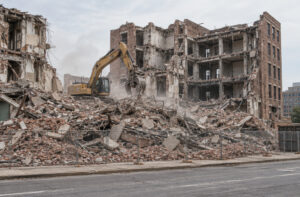
Mechanical razing utilizes hydraulic excavators, bulldozers, cranes and attachments to accelerate demolition. Excavators with rotary hydraulic shears slice steel, muffled rockbreakers quietly smash concrete, and hydraulic hammers pound foundations.
This suite of tools allows teams to demolish walls and frames in days, not weeks. In office complexes and municipal buildings, mechanical methods clear large volumes quickly and enable staged demolition in occupied spaces.
On-site crushers diminish concrete into aggregate, and plant advances assist in sorting wood, metal and masonry for reuse on the replacement site. Limits emerge in compact city blocks or decorated facades. Huge machines require room and can cause collateral damage if not staged cautiously.
Controlled Implosion
Implosion – a type of specialized engineering – is the way to go for tall or complicated buildings. Explosives, once nitroglycerin and later TNT, RDX or C4, are positioned to make the building collapse inward.
Planning is exhaustive: structural analysis, vibration and dust modeling, evacuation zones, and contingency plans. Landmark cases like the J. L. Hudson Department Store show how can-do implosion can redefine a skyline in a hurry.
Implosion is faster time on site but requires tight controls, specialist teams and regulatory approval. It is not good where surrounding structures or infrastructure cannot tolerate the shock and debris.
When selected, implosion is combined with diligent debris sorting and recycling efforts to further minimize landfill volume.
Heritage Loss and Preservation
Heritage is not only about old buildings and antiquities; it’s about a collective sense of what belonged before, what is losing, and what must be preserved. The subsequent subsections explore cultural, civic, and legal contexts in which house demolition as a service meets heritage, providing actionable strategies to maintain history amidst the transformation of homes and buildings.
Cultural Erasure
When our iconic homes or storefronts are demolished and substituted with cookie-cutter glass or concrete boxes, special local flavor tends to disappear. Distinctive façades and moldings, stained glass, mosaic tile, and other craft details are not just decoration; they are design intelligence and community narrative that cannot be replicated inexpensively.
Demolition by neglect, letting a building rot until demolition is the only safe alternative, adds insult to injury because it bypasses review procedures and exasperates preservation commissions without enforcement authority. Public reaction ranges from protest campaigns and lawsuits to mute acquiescence.
Iconic losses, such as old Penn Station, provoked widespread protests and resulted in new preservation statutes and movements. Communities have employed documentation—photographs, measured drawings, and oral histories—to preserve memory. Plaques, interpretive panels, and virtual tours all help keep the heritage alive, even after it’s gone.
Nonprofit groups and local governments may intervene by purchasing and restoring imperiled sites or repurposing structures into offices, community centers, or resilient housing, providing both historical continuity and practical utility.
Civic Identity
Civic buildings ground a city’s identity. City halls, courthouses, post offices, and libraries often reflect civic values in their scale and style. Taking them down can change how citizens view their own citizenship. Pride and civic participation can recede when beloved monuments go missing.
Adding to the culture of place is the idea that architectural style affects behavior. Neoclassical forms imply stability, while modernist civic complexes suggest efficiency. Weaving history back into new developments, preserving façades, repurposing materials, and creating public spaces that reference older patterns maintains civic continuity.
Community-based initiatives that map local heritage or resurrect lost patterns in new construction can revive a feeling of rootedness. Grants, tax credits, and low-interest loans lower the cost hurdle for adaptive reuse and preserve the civic fabric.
Conservation Laws
Legal tools play a key role in slowing or preventing destructive demolition. Some jurisdictions require permits, heritage assessments, and a review period before demolition can proceed. Enabling legislation in several states allows municipalities to force maintenance or impose fines to stop demolition by neglect.
Public awareness and advocacy pressure officials to act and supply political will for stronger rules. Common requirements before demolition as a service proceeds include:
- Heritage assessment or survey report
- Demolition permit and review period
- Public notice and comment opportunity
- Proof of maintenance history or remediation plan
- Mitigation plan for documented artifacts
A transparent register of protected monuments and their protection status assists planners, owners, and the public in making informed decisions.
Landmark Case Studies
Landmark house demolitions influenced policy, public opinion, and urban form. These cases illustrate what is lost and what can be gained in homes and buildings. They frequently connect to rule changes and preservation decisions along with technical research techniques like geospatial and image analysis to monitor building inventories and lifespans.
1. Civic Centers
20th century civic center demolitions changed the way cities organize government and public life. Congressional offices 06/2023 landmark case studies. Others were demolished to accommodate new complexes that centralize services and include additional parking, altering access for both staff and citizens.
The disappearance of ornately decorated council halls and court buildings stripped neighborhoods of architectural anchors and eliminated instances of civic architecture. Public reaction varied: some communities accepted change for perceived efficiency. Others later pushed back when a new complex failed to provide the public spaces the old building once did.
Trondheim’s history shows regulation matters. Masonry requirements from 1846 shaped durable stocks, while a 1981 preservation policy later slowed demolition rates and altered the city center’s building mix.
2. Transit Terminals
Landmark case studies hark back to historic terminals like the old Pennsylvania Station to feel the stakes. Demolition reshaped mobility and the commuter experience, exchanging stately waiting halls for retail uses and reconfigured circulation.
The architectural loss was a cultural loss. Those large light-filled concourses and ornamented facades had civic significance. New edifices, Madison Square Garden, for example, reshaped purpose and persona yet provided fewer civic benefits.
Epic case studies in geospatial and image analysis can measure these shifts, offering survival and lifetime values each decade to illustrate how terminal sites develop.
3. Commercial Towers
The implosion and mechanical razing of skyscraper office towers pose major engineering challenges in congested neighborhoods. Controlled collapse, dust mitigation, and structural sequencing are central challenges.
Owners pursue replacement for economic reasons, including increased floor area, modern systems, and higher rents. Recycling concrete and steel minimizes waste, but the carbon and embodied energy are still substantial.
Modeling demolition hazard rates reveals a sensitivity to policy and market shocks, and our estimates of mean lifetime vary widely by distribution choice, ranging from roughly 113 years to well over 1,000 in some models.
4. Industrial Relics
Tearing out old factories brings big city blocks free but often exposes toxins and unsafe substances. Demolition has to deal with asbestos, lead, and contaminated soils.
Adaptive reuse is the way to go. Warehouses converted to housing or creative spaces preserve heritage and reduce waste. Documenting industrial artifacts prior to work commencing aids the historical record and guides decisions.
Geospatial techniques assist in mapping where hazard rates decline after conservation regulations, instructing planners.
5. Imperial Monuments
Pulling down magnificent imperial edifices carries great political resonance. These are buildings that tell stories that define us.
Whether you choose to keep or discard them depends on values, safety, and reuse potential. Contextual lists of destroyed monuments allow academics and audiences to learn from decisions.
Structural Risks and Hazards
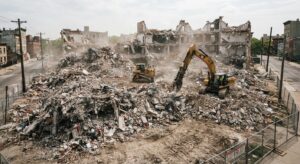
Demolition involves some fundamental risks that need to be recognized and controlled prior to work commencing. Primary hazards are airborne debris, partial collapse, noise and vibrations, and air overpressure during an implosion.
Designate a site safety officer to monitor all demolition services, enforce protocols, and maintain open lines of communication with authorities and neighbors. Monitoring should be continuous, both visually and with instrumented vibration, air quality, and pressure readings.
Toxic Substances
Old structures often hide hazardous materials. Asbestos in pipe wrap, siding, ceiling tiles, and other materials is common in buildings built before 1975 and especially before 1970. Lead paint, PCBs, and other toxins might be lurking.
Reduction and removal must occur prior to heavy demolition. Certified inspectors should sample materials, record locations, and observe local disposal regulations.
Checklist for hazardous material identification and disposal:
- Inventory of suspect materials and sample results.
- Contractor licenses and abatement permits.
- Containment and negative-pressure controls.
- Waste transport manifests and disposal facility confirmation.
- Air monitoring and clearance testing before demolition.
Trust the checklist. Record keeping safeguards workers, residents, and the project from legal and health hazards.
Material Instability
Structural stability is a primary safety concern. Aging buildings can fail in unexpected ways because past repairs, hidden corrosion, or water damage change load paths. Engineering assessments must include load analysis, demolition sequencing, and temporary shoring plans.
Use methods such as finite element checks or simple probe tests to find weak spots. Monitoring during house demolition and large-scale wrecking reduces surprise collapses.
Use tilt meters, load cells, and visual spotters to monitor shifts. Keep in mind that loud noise and vibrations impact surrounding structures and have to be monitored. They can induce minor cracking or even cause older components to dislodge.
If you encounter any material instability, document each case with photos and data to improve future job procedures.
Urban Proximity
Demolitions in proximity to other structures and infrastructure present sophisticated hazards. Residents living nearby deal with debris, dust, vibration, and air overpressure from implosion events that can crack windows or damage facades.
The inside-out approach and targeted takedown minimize strike by eliminating internal loads early and managing collapse. Coordination is essential.
Notify city authorities, emergency services, and utility companies. Turn off or divert utilities to avoid carbon monoxide buildup, flooding, or electrical hazards.
Map the proximity challenges before you plan, such as utility lines, pedestrian routes, and sensitive receptors such as schools and hospitals. Schedule noise and vibration thresholds and equip mitigation such as hard screening, water spray for dust, and scheduled work phases.
Recycling Rubble to Aggregate
Recycling rubble into aggregate turns waste from demolished buildings into usable material for new projects. This reduces dumping costs and provides a local source of aggregate when natural gravel is in short supply.
Processing generally centers on concrete, brick, and mixed masonry and seeks to eliminate contaminants, size fragments, and grade particles for coarse and fine applications.
Sorting, Crushing, and Repurposing
The sorting process begins at the deconstruction site and continues at the recycling plant. Heavy items and hazardous materials are removed first: metals, wood, plastics, gypsum, and any asbestos-containing material must be separated. This careful separation is crucial in house demolition projects where safety and compliance are paramount.
Manual picking lines, magnets, and air separators are standard in this process. Materials like concrete and brick are sent to the crushing line, while soils and fines are either stockpiled or treated. The crushing method breaks down large pieces to specified sizes, making it essential for recycling in demolition services.
Crushing breaks down large pieces to specified sizes. Primary crushers reduce slabs and blocks to approximately 150 to 300 mm. Secondary and tertiary crushers grind material further into coarse aggregate and sand-sized fractions.
Screening phases separate sizes, and water wash units eliminate clays and fine dust if required. Crushing exposes old mortar, which can increase porosity in the recycled aggregate and impact water demand in mixes, especially when preparing materials for new homes and buildings.
Reuse depends upon the application. Recycled coarse aggregate (RCA) can be substituted for natural gravel in concrete, road base, and drainage layers, demonstrating the versatility of materials from house demolition.
RFA with a high share of particles less than 75 µm can reduce mortar water penetration depth and improve durability. Fifty percent RCA concrete mixes have demonstrated compressive strengths up to 16 MPa in certain instances, which is appropriate for non-structural architectural elements.
Its strength and durability can be significantly improved if combined with natural soil, compared to using the recycled material alone.
- Remove contaminants: metals, wood, plastics, gypsum, hazardous waste.
- Separate by type: concrete, brick, mixed masonry, soils.
- Primary crushing: reduce large pieces to 150–300 mm.
- Secondary/tertiary crushing: produce coarse and fine fractions.
- Screening: grade material into aggregate sizes and sands.
- Washing: remove fines and clays to lower water demand.
- Stockpile and cure: allow for moisture equilibration.
- Blend and test: Mix recycled and natural aggregates to meet specifications.
- Quality control: test compressive strength, water absorption, drying shrinkage.
- Deliver and use: for concrete, road base, landscaping, fill.
Recycled Aggregate vs Traditional Materials
|
Metric |
Recycled Aggregate |
Conventional Aggregate |
|---|---|---|
|
Cost |
Generally lower |
Generally higher |
|
Strength |
Variable, depending on source |
Consistent and reliable |
|
Durability |
Can be less durable |
Highly durable |
|
Environmental Impact |
Lower, promotes recycling |
Higher, resource-intensive |
|
Typical Applications |
Road base, concrete, and drainage |
Concrete, asphalt, and construction |
Future Circular Demolition Trends
The demolition world is transitioning from landfill practices to a focus on material care and stewardship. Buildings serve as a parts depository, not merely a pile to clear. This shift is significant because the building industry produces approximately ten billion tonnes of construction and demolition waste globally each year, with nearly 534 million tonnes of traditional materials—wood, metal, glass, concrete—sent to landfills annually. House demolition as a service is becoming increasingly relevant in this context.
In the U.S. alone, around 200,000 to 300,000 structures are demolished every year. Therefore, even small shifts in practice can significantly reduce waste and costs across markets. Anticipate circular demolition becoming a norm, as an emerging ‘zero-waste’ approach gains momentum, advocating for advanced-grade material circularity in homes and buildings.
Not bulk demolition, but teams inventorying and harvesting fixtures, structural steel, timber, and bricks for direct reuse or remanufacture. Building repurposing will get bigger, particularly in areas with pre-1940s stock, turning warehouses, factories, and churches into lofts, galleries, or community space keeps embodied carbon where it is and slows the onslaught on landfills.
Changing occupancy inside a building will be utilized more frequently. Gutting interior systems while maintaining the building’s structure can be challenging but is feasible with careful planning and phased work, ensuring that more material remains in service. Focus on future circular demolition trends is essential for sustainable practices.
Digital twins, LiDAR scans, and 3D modeling map buildings to a millimeter, allowing teams to plan selective deconstruction that focuses on salvable components. Software can label materials, predict reuse value, and connect to marketplaces for reclaimed materials. Robotic demolition tools and remote-controlled saws allow crews to take components down without pulverizing them, boosting the output of materials that are still whole.
For instance, a brick façade scanned and cataloged for reuse in future projects avoids new brick production and preserves the character of the structure. The need for cleaner means of demolition is evident, as on-site separation of materials, wet suppression to reduce dust, and low-emission equipment help minimize immediate environmental harm.
Reuse of structural timber and steel avoids the embodied CO2 of new production. Cleaner transport logistics, such as shorter haul distances and consolidated loads, cut emissions. Life-cycle tools that include salvage, reuse, landfill diversion, and transport impacts provide more definitive answers to net carbon impacts.
Stay informed about industry trends and innovations that promote eco-friendly demolition services. Institutional networks among owners, reuse markets, waste managers, and designers are crucial for scaling circular practices. New tools for holistic sustainability analysis can assist in making informed decisions to adapt, deconstruct, or demolish structures effectively.
Keeping an eye on them helps contractors and clients slash costs, risks, and environmental damage while unlocking new revenue from reclaimed materials.

Conclusion
Demolition of old buildings impacts cities, people, and the land. Safer ways trim peril for workers and neighbors. Meticulous site surveys preserve the essential portions of a location and maintain local heritage. By sorting concrete, brick, and steel, it reduces trash and provides fresh raw material for roads and foundations. The case studies reveal unambiguous successes and expensive errors. New tools and rules are pushing projects toward reuse and less landfill. Little design tweaks now simplify future demolition, making it both easier and greener. If you’re considering a teardown, balance safety, history, and reuse. Need a checklist or quick plan for a specific site? I can create one with local regulations and expenses in mind.
Frequently Asked Questions
What are the main demolition methods used today?
Selective deconstruction, high-reach robotic dismantling, and the implosion method are typical in demolition services. Each approach prioritizes a different balance of speed, cost, safety, and salvage for almost all types of structures.
How can heritage buildings be protected during demolition?
Utilizing sensitive recording and facade retention in house demolition as a service can help preserve cultural elements while minimizing loss during the destruction of almost all types of structures.
What safety risks should I expect on demolition sites?
Falling debris and structural collapse during house demolition can release dust with respirable particles and hazardous materials like asbestos, making professional risk assessments essential for safety.
Can demolition waste be reused or recycled?
Yes. Concrete and masonry can be crushed into aggregate during house demolition. Metals, timber, and bricks are frequently salvaged, promoting a cleaner means of demolition while recycling reduces landfill waste.
What regulations govern demolition work?
Local building codes, environmental laws, and waste management rules govern the house demolition of old homes and buildings. Check with local authorities early.
What are future trends in circular demolition?
Design-for-deconstruction and modular disassembly will expand, allowing for cleaner means of demolition when homes and buildings are demolished to make room for new structures.
How do landmark cases influence demolition practice?
Prominent projects, including house demolition and building implosions, establish legal precedent, influence public opinion, and define standards for safety and preservation.
